


UNBEATABLE has always made its mark not through simplicity, but through unapologetic ferocity. It is a game defined by rhythm-driven combat, relentless audio-visual assault, emotional intensity, and a uniquely stylized aesthetic that turns every battle into a musical performance. Players don’t simply press buttons—they perform, reacting to a barrage of beats, patterns, and visual pulses meant to sync perfectly with the soundtrack.
But beneath this beautifully orchestrated chaos lies a deeper issue: desynchronization of rhythmic cues. This isn’t about difficulty being “too hard”—UNBEATABLE is proudly ruthless. Instead, the true challenge comes from something more subtle and far more disruptive: a hidden misalignment between what players hear and what players see, creating a difficulty curve that isn’t intentional, predictable, or intuitive.
This article dives deeply into that specific issue—how desynchronized cues evolve through the game, how they affect timing precision, why they create unintentional difficulty spikes, and what strategies players must adopt to overcome them.
1. The Foundations of UNBEATABLE’s Rhythm System
UNBEATABLE’s rhythm mechanics are built on one core principle: the player’s actions should be in harmony with the music. Every hit, block, dodge, or combo sequence is derived from the soundtrack’s BPM and beatmap.
However, this foundation starts to fracture when the visual signals drift even slightly out of alignment with the audio cues.
H3: What Rhythm-Lock Should Achieve
Ideally, rhythm-lock ensures that:
- Beats match on-screen animations
- Enemy attacks follow musical phrases
- Player muscle memory is reinforced
When working perfectly, the game feels tight, fair, and intuitive.
H4: But Why It Breaks
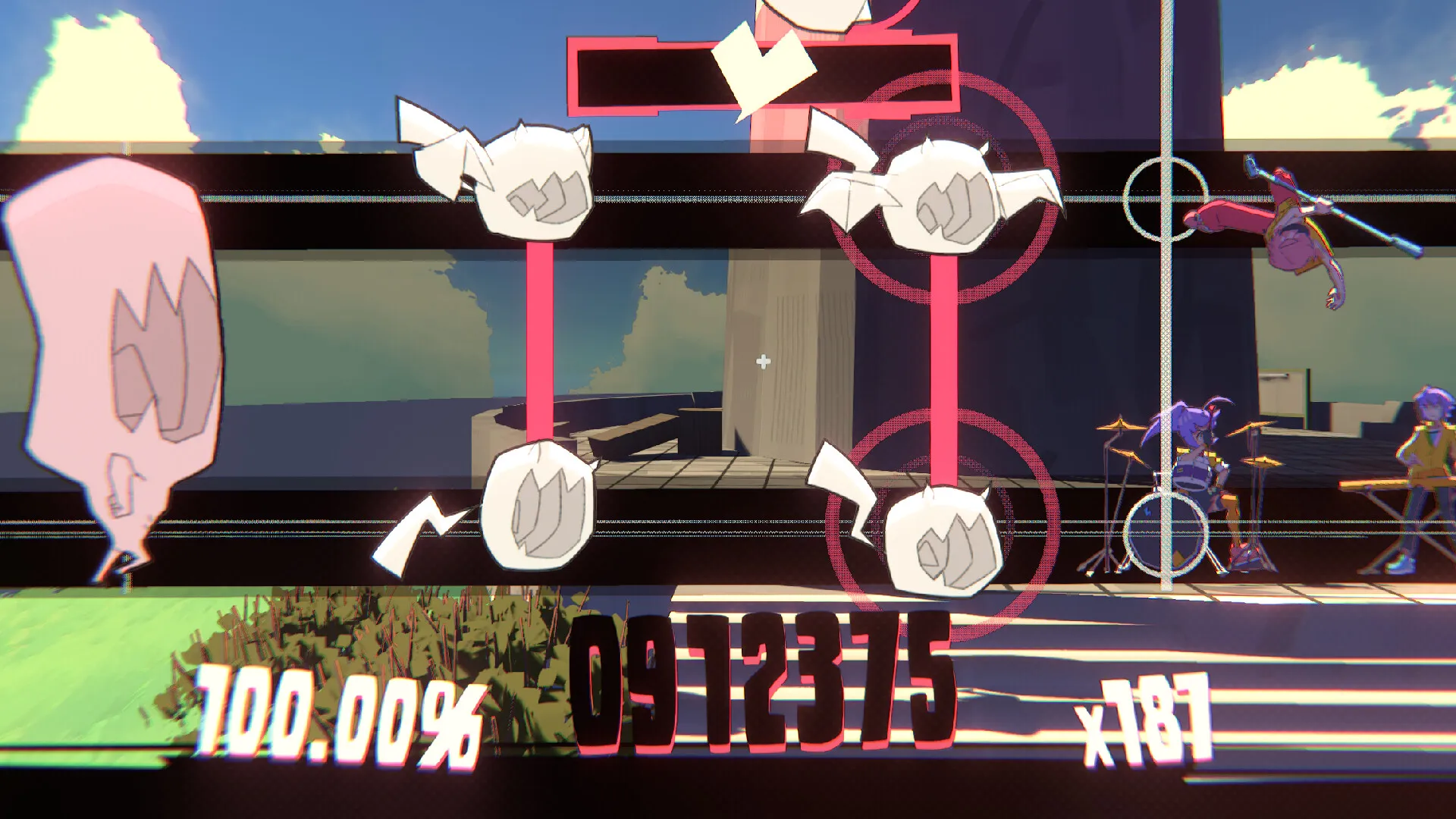
The issue begins when animations, screen effects, or track layers introduce latency drift, nudging visual timing away from the audio’s true beat. This creates a timing “gap” that players must adapt to manually.
2. How Visual–Audio Drift Slowly Escalates
The problem is rarely obvious at first. UNBEATABLE often starts with clean, well-synced tracks. But as difficulty increases, so does visual chaos—and with it, desynchronization.
H3: Early Game Stability
In early segments:
- Enemy patterns stay simple
- Screen clutter is minimal
- Only one or two rhythmic layers play
Synchronization feels natural and predictable.
H4: The Slow Build
The drift emerges gradually:
- Extra percussion layers arrive
- Background effects stack
- Enemy animations speed up without precise recalibration
By mid-level, the cues no longer feel like a single synchronized system.
3. The Heart of the Problem: Multi-Layered Audio Complexity
UNBEATABLE’s soundtrack is complex. Tracks feature overlapping beats, syncopated patterns, and shifting time signatures that enhance gameplay intensity. But this complexity makes it uniquely vulnerable to desync issues.
H3: Layer Interference
Multiple layers can cause:
- Competing rhythms
- Off-beat attacks
- Fake cues created by background instruments
When players rely on one rhythm but enemies follow another, the disconnect creates frustration.
H4: Player Confusion
The human brain tries to lock onto the dominant rhythm. But when dominant rhythm ≠ gameplay rhythm, the player is thrown off.
4. The Visual Side: Over-Animation and Inconsistent Attack Telemetry
While audio layers cause the initial drift, visual animation exaggerates it.
H3: Over-Animated Attack Signals
Some attacks contain:
- Extra frames not tied to rhythm
- Motion blur masking true timing
- Flash effects that distract
These animations sometimes begin before or after the real hit window, tricking players into mistimed inputs.
H4: The Telemetry Problem
Attack telemetry should convey:
- Timing
- Momentum
- Direction
When telemetry loses alignment with audio cues, players must manually override instinct and re-learn each encounter.
5. The Hidden Difficulty Curve Nobody Talks About
Desync introduces a difficulty curve that is not intended by design and not explained by the game. It is an invisible wall that affects even skilled rhythm-game veterans.
H3: Timing Shifts Mid-Song
Late sections may:
- Speed up visually
- Maintain the same BPM
- Or vice versa
The result: timing feels wrong, even though BPM hasn’t changed.
H4: Fake Difficulty vs. Real Difficulty
UNBEATABLE’s real difficulty lies in precision.
Its fake difficulty lies in unpredictability.
Desync creates the latter.
6. Player Adaptation: How Experienced Players Compensate
Skilled UNBEATABLE players develop coping mechanisms that help them navigate misaligned cues—but these adaptations require discipline beyond normal rhythm game expectations.
H3: Technique 1 – Prioritizing Audio Over Visual
Veteran players often:
- Focus solely on percussion
- Ignore flashy visuals
- Time inputs from their internal “click track”
This requires training the ear more than the eye.
H4: Technique 2 – Memorizing Patterns by Feel
Advanced players memorize:
- Note density
- Rhythmic accents
- Expected attack timing
This transforms gameplay from reactive to predictive.
7. When Audio Itself Becomes Unreliable
Desync is not exclusively visual. Certain stages create intentional disruptions—filters, distortions, echo effects—that indirectly knock the player off beat.
H3: Audio Filters
Some tracks incorporate:
- Reverb pulses
- Muffling filters
- Volume drops
These affect how clearly the beat can be heard, obscuring timing.
H4: Structural Rhythm Shifts
In certain songs, the downbeat shifts mid-track.
This is a musical choice—but also creates timing conflict when visuals don’t shift with it.
8. The Psychological Pressure of Perceived Failure
Desync not only disrupts timing but also affects player psychology.
H3: "Why Does This Feel Wrong?" Anxiety
Players often feel:
- They’re mistiming inputs
- Their reflexes are failing
- They’re “just bad”
But the issue isn’t skill—it's inconsistency in cue alignment.
H4: Rhythm Fatigue
When cues don’t match:
- Brain processing increases
- Reaction intuition collapses
- Fatigue accumulates rapidly
This leads to failure spirals late in songs.
9. Community Strategies to Overcome Desynchronized Levels
The UNBEATABLE community has developed techniques to help players adapt to flawed timing segments.
H3: Strategy Lists from Veteran Players
Common advice:
- Train using isolated percussion
- Reduce visual settings
- Practice stages at lower speed
- Use metronome tools outside the game
These help players rebuild rhythm intuition.
H4: Pattern Study
Some players break down songs into:
- BPM sections
- Signature changes
- Attack clusters
This transforms chaos into understood structure.
10. The Future of UNBEATABLE's Rhythm Fidelity
A major question remains: should desynchronization be fixed, minimized, or kept as part of the game’s identity?
H3: Arguments for Fixing
Improvements would:
- Increase fairness
- Reduce frustration
- Improve new-player retention
- Showcase the soundtrack more accurately
Better synchronization would elevate gameplay to its intended level.
H4: Arguments for Leaving It
Some fans argue that:
- Chaos is part of the charm
- Desync adds personality
- Difficulty becomes uniquely “UNBEATABLE-like”
But unintentional difficulty rarely improves design.
UNBEATABLE thrives on style, aggression, and rhythmic identity—but behind its polished intensity lies one of the game’s most difficult and least-discussed problems: the creeping desynchronization between audio and visual cues. As songs intensify, layers multiply, and animations escalate, the once-unified rhythm system fragments into a mixture of misleading visuals, competing rhythms, and mental overload. This creates a difficulty spike not rooted in mastery but in cognitive dissonance.
Players who overcome this problem do so by rewriting their muscle memory, training themselves to follow audio instead of visuals, memorizing entire patterns, and resisting psychological strain. Yet this adaptation is itself evidence that the system’s flaw is real and impactful.
UNBEATABLE is hard by design—but desynchronization is what makes it unpredictable. Understanding and adapting to this hidden challenge is key to mastering the game’s true spirit.